For Foster Parents
It is 10 p.m. The house is finally quiet. Now what?
You took the training. You read the books. And still, tonight, there was a meltdown you could not explain. The Wagon Method was built for this exact hour. A shared language, short modules, and one wheel to work on this week.
Stretch 4 · First ClimbYou know this feeling
The books did not prepare you for Tuesday at 6:15 p.m.
You used to think you were a patient person. Then a seven year old told you they hated you, threw a fork, and cried for an hour over a green crayon. And you stood in the kitchen trying to remember whether you were supposed to validate, set a limit, or walk away.
You love this child. You also do not yet know this child. Their history walked in the door with them, and you are reading it in fragments: a flinch at a raised voice, a refusal to eat anything orange, a body that will not settle for sleep. You are trying to be everything at once, and your agency handbook is not cutting it at 10 p.m.
What you need is not another training. What you need is a picture you can hold in your head, a vocabulary that makes the behavior legible, and one small move to try tonight. That is what the method gives you.
How the method fits
Built for the short-on-time, long-on-love caregiver
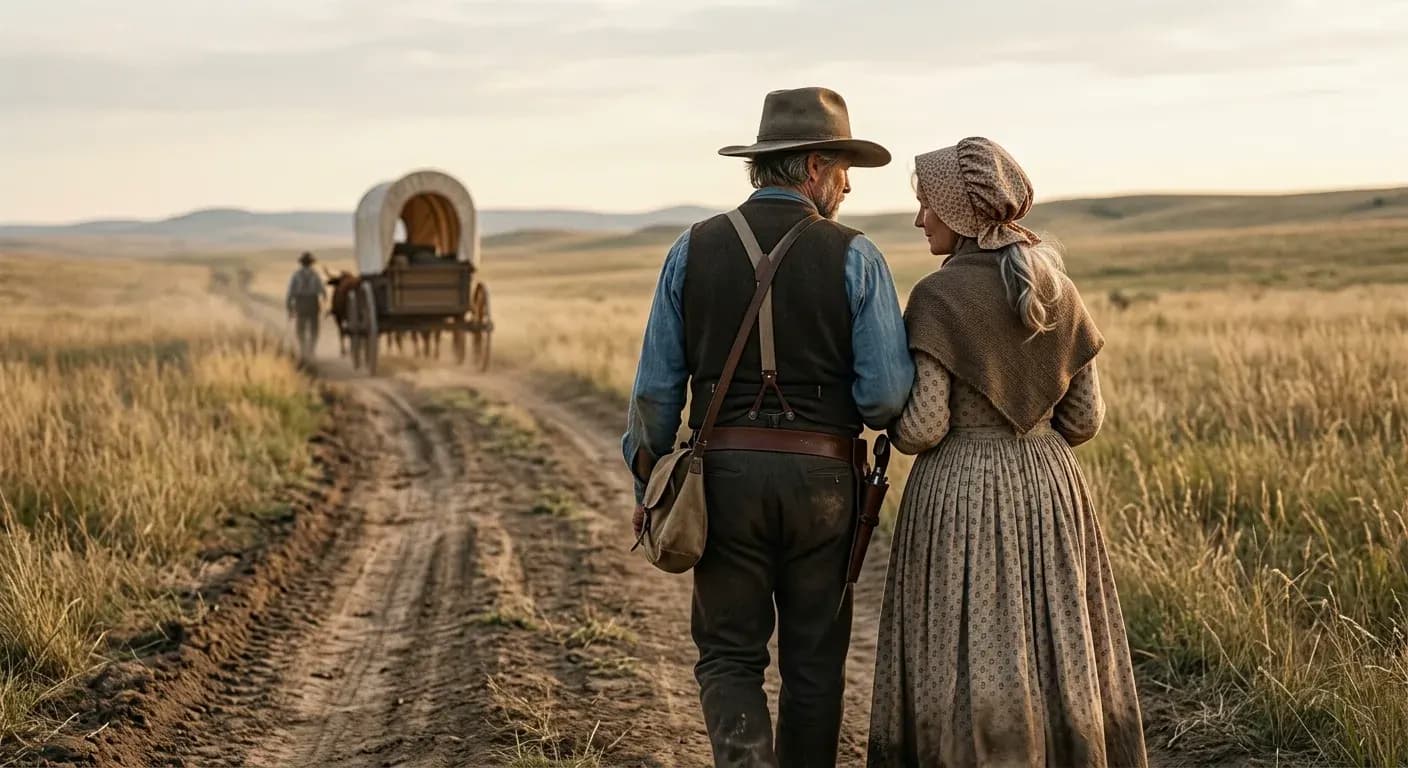
The Wagon Method is a picture of a covered wagon. Four wheels, advocacy, grounded experiences, obstacles, and a nurturing network. When you can see the whole wagon, the behavior you are trying to interpret starts to have a place to live.
One picture
The whole wagon
Instead of juggling a stack of techniques, you get one shared image. Safety, Stability, Love and Acceptance, Identity and Value. Four wheels you can name, point to, and come back to.
Short modules
Read in ten minutes
Every module is sized for the crack of time you actually have. Between bedtime and your own bedtime. During the quiet after school drop-off. Not a weekend seminar.
Strategies for tonight
Something to try
Every spoke ends with a specific small move. Write tomorrow on a whiteboard. Name one feeling out loud. Offer a predictable transition five minutes before it happens. Little, concrete, repeatable.
Your trail, three steps in
Here is what your first miles look like
What starts
A shared vocabulary that makes the behavior legible
In the first week, you stop calling it acting out and start calling it a Safety spoke under stress. You notice a meltdown before dinner and recognize it as a Consistent Routines miss, not a character flaw. You learn the word spoke, and you learn that each one has specific strategies you can try without calling a therapist at 10 p.m.
What deepens
One wheel at a time, then two, then four
Month two, you start to see how Safety and Stability ride together. Sleep hygiene was the Stability spoke that made the Calming Strategies spoke possible. You stop treating wheels as a checklist and start treating them as a picture of a child. When something is off, you can point to where on the wagon it is coming from.
What changes over time
You stop guessing and start walking
By month six, the method is no longer a thing you study. It is a lens you look through. You can describe your child's week to a caseworker or therapist in the same language they already know. You still have hard nights, but you no longer feel lost on them. The trail is steep. It is also visible.
From foster parents on the trail
Words from people a few miles ahead of you
“I stopped feeling like I was failing and started feeling like I had a map. The Safety wheel alone changed our bedtime.”
Foster parent, two years on the trail
“The first time I used the word spoke with our caseworker, her whole face lit up. We were finally talking about the same child in the same words.”
Foster parent of three
“I read a module while waiting in the school carpool line. That afternoon I tried the one small move. It worked. I cried in my minivan.”
Kinship-to-foster caregiver
“I wish I had this my first placement. I would have been less scared and more present. I will not start a new one without it.”
Veteran foster parent
Questions we hear at 10 p.m.
Before you sign up
I just got a placement yesterday. Where do I even start?
Start with the Safety wheel. Not because your home is unsafe, but because every child in transition is reading the new room for signals. Consistent routines, predictable changes, and clear expectations tell a nervous body that tonight is different than last night. One wheel, one week. You do not have to learn everything in a weekend.
Why is my child acting like this when I am being kind?
Because kindness is not yet trusted. A child arriving in your home has learned to read faces, voices, and silences for danger. Your gentleness is new data, and new data takes time to integrate. The behavior you are seeing is rarely about you. It is a nervous system telling a story about a different house. The method gives you a way to read that story without taking it personally.
How much time does this take? I do not have extra hours.
Modules are short on purpose. Most run five to fifteen minutes, because the real learning happens between the modules, in the moments you are already in. You can read on your phone while the oatmeal cooks. You can listen during a school pickup. The framework lives in your hands, not in a binder on a shelf.
Do I need my agency's permission to use this?
No. The Wagon Method is an educational framework for caregivers. It is not a treatment program, a replacement for your child's care team, or a clinical service. You can bring it to your agency and your caseworker as a shared vocabulary, and many of them already use it.
What if I am terrible at this and I make it worse?
You will not. Children healing from trauma need a caregiver who keeps showing up, not a caregiver who always gets it right. The method is built around repair, not perfection. Every section assumes you will have hard days, and each one offers a way to come back to the trail without shame.
What happens if this placement ends?
The framework travels with you. The wheels you practiced, the language you learned, and the small repairs you made are not lost when a placement changes. They become part of how you show up for the next child, and they become part of the record you carry forward. The trail does not restart. It continues.