
No signup required
Free Resources for the Trail
You don't need an account to start learning. The framework, a self-check you can do right now, strategies for tonight, trusted books, organizations, and crisis support, all in one place.
Start Here
The W.A.G.O.N. Framework
Every child healing from trauma is on a journey, like a covered wagon heading west on the Oregon Trail. Five parts, one picture. When you can see the whole wagon, the next step gets clearer.

Wheels of Well-being
Four wheels hold the wagon up. When one is wobbly, everything else gets harder.
Safety
Physical and emotional safety. Predictable routines.
Stability
Basic needs met consistently. Health, sleep, space.
Love & Acceptance
Belonging. Valued regardless of behavior.
Identity & Value
Knowing who they are. Believing they matter.
Tap any letter above to explore that part of the wagon.
Self-Assessment
Take 2 Minutes. Think About One Child.
Answer sixteen simple questions. This isn't a test. It's a flashlight.
Wheel Check
Four Wheels. Sixteen Questions.
Safety
The foundation wheel. Predictability, emotional safety, felt safety in the body.
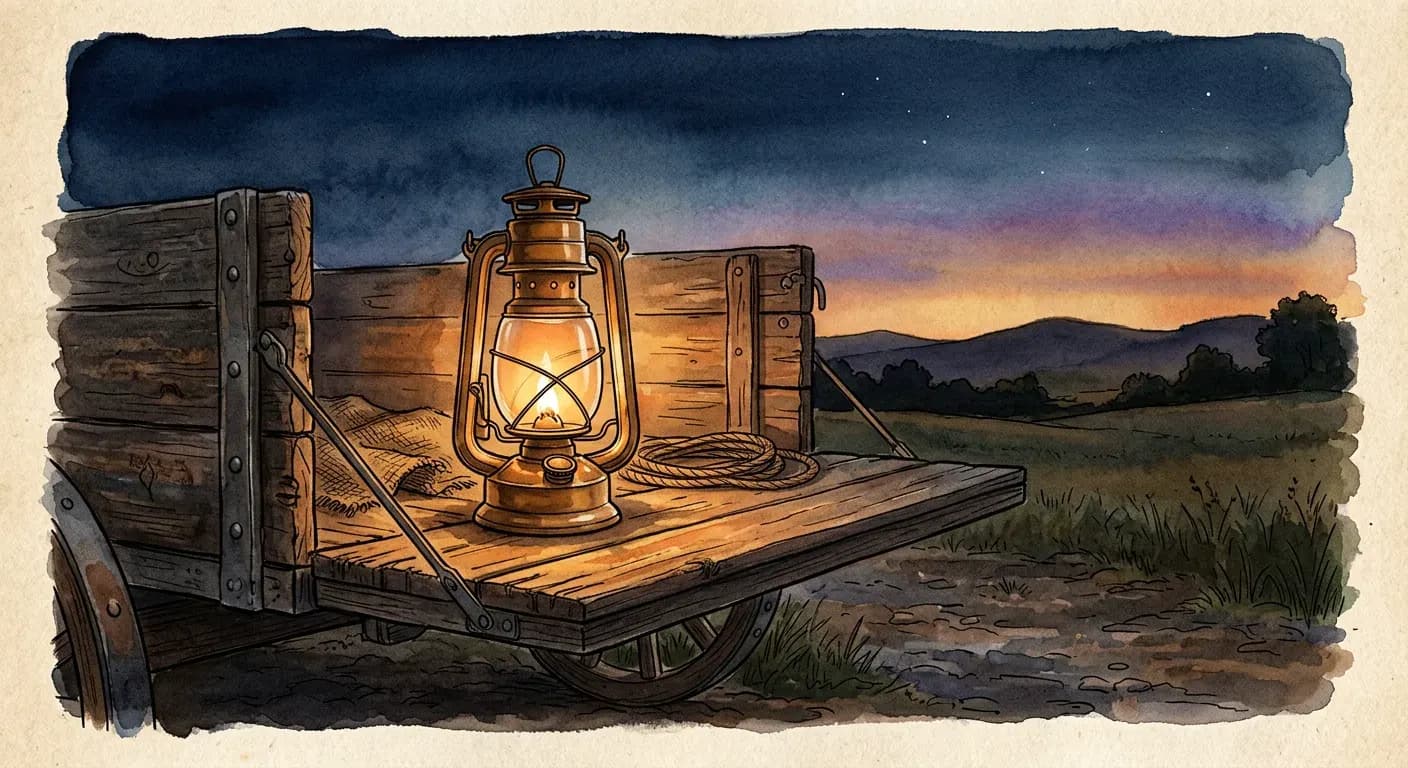
The kids are asleep
5 Things to Try Tonight
You don't need to finish a course to start. Five spoke-based strategies, small enough to try before the lantern goes out. Each one tells you exactly which wheel you're strengthening.
Consistent Routines
Write tomorrow's schedule on a whiteboard or sticky note and put it where your child can see it before bed. Predictability is safety.
Calming Strategies
Try the 5-4-3-2-1 grounding exercise together: name 5 things you see, 4 you can touch, 3 you hear, 2 you smell, 1 you taste. Do it before bedtime.
Quality Time
Set a 15-minute timer and do whatever your child wants. No phone, no agenda. Let them lead. That's it.
Personal Space
Ask your child to pick one corner, shelf, or box that's completely theirs. Nothing goes in or out without their permission.
Acknowledge Feelings
The next time your child has a big emotion, try: 'That sounds really hard. I'm glad you told me.' Before fixing, validate.
Trail Library
Books Worth the Weight in Your Wagon
Every caregiver eventually asks, what should I read next? These six are the ones therapists and foster parents keep coming back to. Start with any one. They're starting points, not substitutes for your child's care team.

The Whole-Brain Child
Siegel & Bryson
The Whole-Brain Child
by Daniel Siegel & Tina Payne Bryson
Twelve simple strategies to nurture your child's developing mind. Short chapters, clear illustrations, and something you can try tonight on every page. The most-recommended starter book for caregivers who want to understand what's actually happening under the behavior.
Keep Reading
The Body Keeps the Score
Bessel van der Kolk
The definitive book on how trauma lives in the body and brain. Dense in parts, but eye-opening for understanding the science behind the behavior you see every day.
What Happened to You?
Bruce Perry & Oprah Winfrey
Reframes the question from 'what's wrong with you?' to 'what happened to you?' A conversation between a neuroscientist and a survivor that's become the starting point for many caregivers.
Beyond Behaviors
Mona Delahooke
Reframes challenging behavior as a stress response, not defiance. Changes how you read a meltdown in real time.
The Deepest Well
Nadine Burke Harris
A pediatrician's account of how Adverse Childhood Experiences (ACEs) shape lifelong health, and what prevents that story from being destiny.
No-Drama Discipline
Daniel Siegel & Tina Payne Bryson
Discipline as teaching, not punishment. Especially useful when the old playbook (timeouts, consequences) isn't working with a trauma-impacted child.
Wounded Children, Healing Homes
Jayne Schooler, Betsy Keefer Smalley, Timothy Callahan
Written specifically for foster and adoptive families. Honest about the toll and full of concrete, compassionate strategies for the home.
Other Wagons on the Trail
Trusted Organizations
You're not alone out here. These organizations have been doing trauma-informed work for years, free guides, training, directories, research. The whole wagon train matters.
National Child Traumatic Stress Network
ResourcesThe largest library of trauma-informed resources for caregivers, clinicians, and educators. Free downloadable guides for almost every situation.
nctsn.org
Center on the Developing Child at Harvard
Research & ScienceWorld-class research on how early experiences shape lifelong health. Free briefs, videos, and serve-and-return guides in plain language.
developingchild.harvard.edu
Child Mind Institute
Mental HealthClinician-reviewed articles on anxiety, trauma, behavior, and mental health. Searchable and parent-friendly.
childmind.org
ACEs Aware
ACEs ResearchEverything you need to understand Adverse Childhood Experiences, including free screening tools and caregiver resources.
acesaware.org
Zero to Three
Early ChildhoodEarly childhood experts on the first three years. Essential if you're caring for a baby or toddler healing from trauma.
zerotothree.org
NAMI (National Alliance on Mental Illness)
Peer SupportSupport groups, education, and a helpline for families navigating mental health. Free, nationwide, peer-led.
nami.org
When the River Runs High
You Are Not Alone.Help Is Already Lit.
If you or your child is in crisis, please reach out. These lines are free, confidential, and staffed around the clock. You don't need the right words. You just need to make the call.
988 Suicide & Crisis Lifeline
24/7 confidential support for anyone in suicidal crisis or emotional distress. For kids, teens, and adults.
Childhelp National Child Abuse Hotline
24/7 professional crisis counselors for anyone worried about child abuse or neglect. Also offers referrals to local resources.
Crisis Text Line
24/7 free text-based crisis support in English and Spanish. Ideal when you can't talk out loud.
SAMHSA National Helpline
24/7 treatment referral for mental health and substance use. Free, confidential, English and Spanish.
National Domestic Violence Hotline
24/7 advocates for anyone affected by domestic violence. Safety planning, shelter referrals, and emotional support.
If someone is in immediate physical danger, call 911.