G in W.A.G.O.N.
Grounded Experiences: the wagon itself.
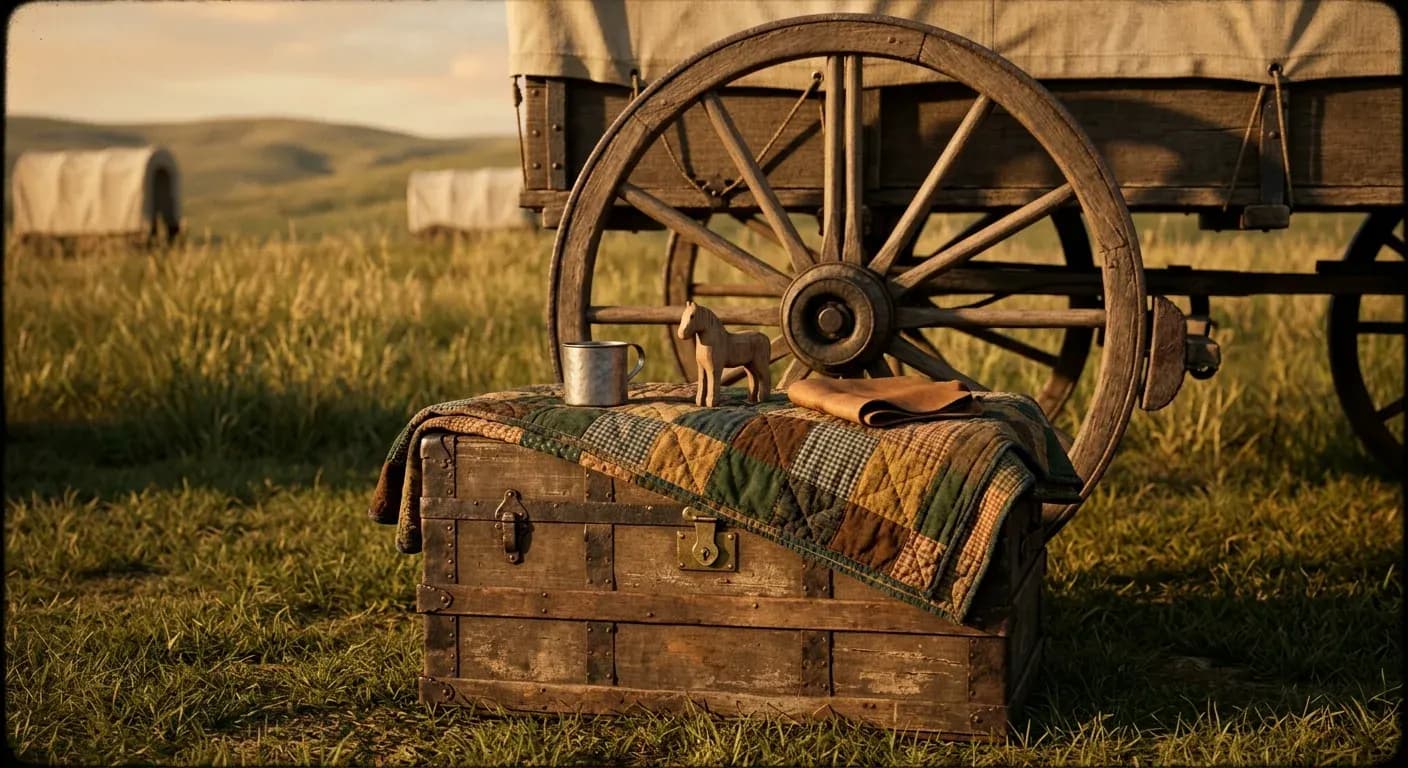
The wagon is the child's inner world: their core beliefs, their defense mechanisms, their coping tools, their fastest responses. Everything they have lived so far is stored somewhere on board.
Stretch 2 · Settling InThe wagon is not empty.
A child who has been on the trail for a while arrives with a wagon that is already carrying a lot. Some of what is in there is beautiful and useful. Some of it kept them alive through weather nobody should have to stand in. Some of it will need to be re-packed over time.
Grounded Experiences names six parts of the wagon so that you can see what you are working with. You are not expected to empty the wagon and start fresh. You are expected to notice, respect, and keep pulling steady.
Six parts of the wagon
What the child is carrying.
Core Experiences
Bed/Box
The child's core beliefs, self-identity, and foundational life experiences, both positive and traumatic.
Read the Bed/Boxpage on the trail →
Protective Mechanisms
Canopy/Bonnet
The child's defense mechanisms and protective behaviors developed as survival responses to trauma.
Read the Canopy/Bonnetpage on the trail →
Access to Past
Tailgate
The child's ability to access, process, and integrate past experiences at their own pace.
Read the Tailgatepage on the trail →
Coping Skills
Toolbox
The skills and coping mechanisms the child has developed, both healthy and maladaptive.
Read the Toolboxpage on the trail →
Immediate Responses
Jockey Box
The child's fight/flight/freeze reflexes and immediate stress responses.
Read the Jockey Boxpage on the trail →
Extended Influences
Sideboards
External influences and experiences that shape the child's worldview and behavior patterns.
Read the Sideboardspage on the trail →
Common questions.
Why call it the wagon and not the child?
The wagon is a gentler metaphor than 'the child' because it lets us look at the parts without making the child the problem. A child is not broken. The wagon they are riding in has dents and patches from the trail, and we can name those parts without naming the child as the thing that needs fixing.
What goes in the jockey box?
The jockey box holds fast responses: fight, flight, freeze, fawn. A child who has lived through repeated harm often has a very well-stocked jockey box, because those responses kept them alive. They are not bad. They are old tools that may not fit the new trail.
What are the sideboards?
Sideboards are the outside influences that shape what the wagon carries. Media, peers, neighbors, school culture, online worlds. You cannot remove the sideboards, but you can notice what they are letting in and out.
How do I work on any of this?
You do not work on the wagon directly. You work on the wheels, the advocacy, and the obstacles, and the wagon gets slowly re-fitted as the child lives new experiences. The Grounded Experiences page is here so you understand what you are looking at, not so you rebuild it from scratch.