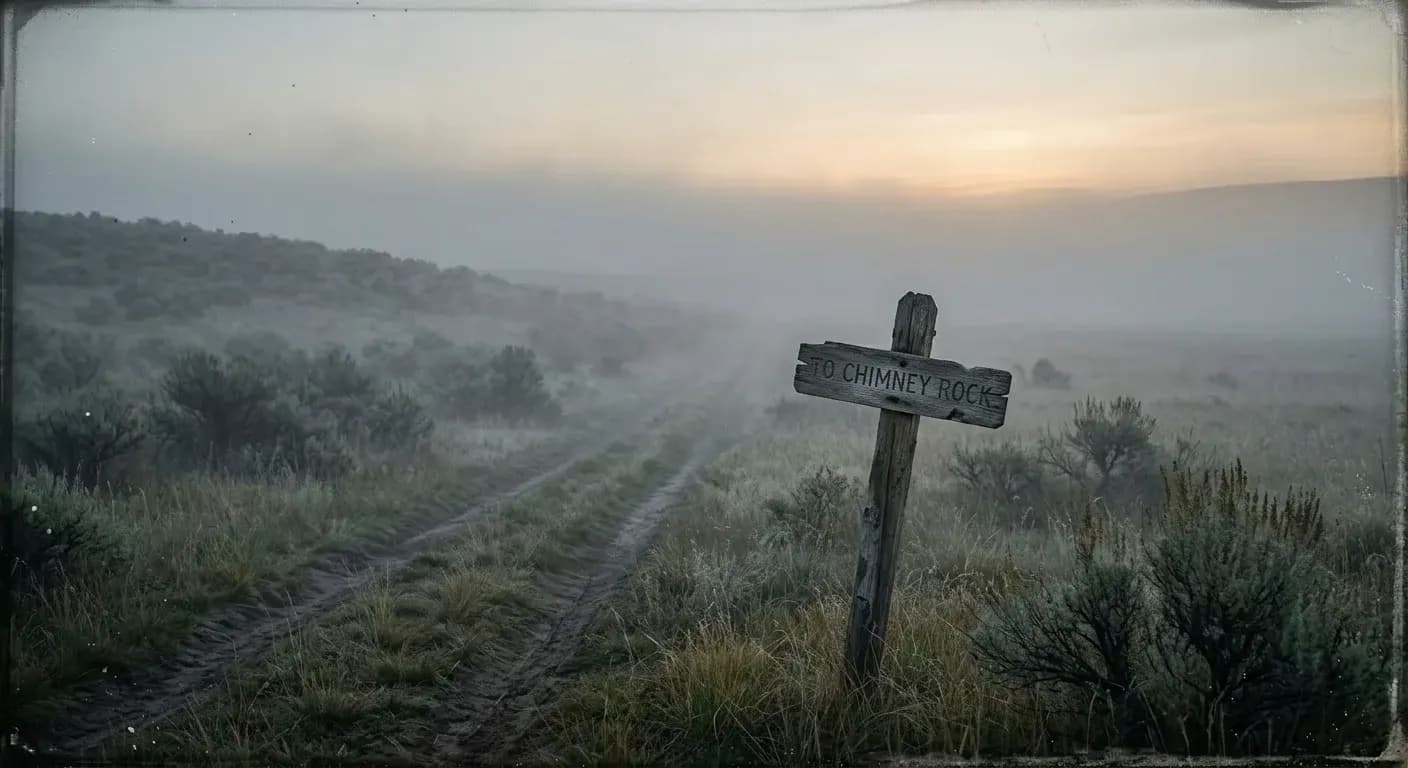
The Seven Stretches
Seven landmarks on a long trail.
Each stretch is a full essay: where you are, what is true here, and the work of this part of the trail. Read the one that sounds like your child's days. Start there.
Stretch 3 · PrairiesEvery stretch has its own weather. What helps in Settling In is not what helps on the Plateau. The language used, the pages the site points you to, and the company we hope you keep all shift as the trail shifts under the child. Read each stretch like you are looking at a map, not a scoreboard. The wagon you repaired holds for this terrain; the next terrain will ask different work of the same wagon.
Basecamp
“This is what the child carried before they arrived.”
Every child reaches your home from somewhere. The wagon they bring is the wagon they had before. The wheels that were sound, the cracks already there, the canopy already up. Basecamp is the world the child carried before the trail with you began.
Read the full stretch
Settling In
“We are learning each other.”
The early days in the new home. The wagon is finding its footing in unfamiliar terrain. Routines are forming, the kingpin (trust) is just beginning to set. Some children settle quietly. Some settle loudly. Either way, this is the period before what the child has been carrying starts to surface.
Read the full stretch
Prairies
“The canopy is coming down.”
The surface stays calm for a while, and then what the child has been carrying starts to surface. Behaviors that were dormant now show. The honeymoon, if there was one, ends. The trail begins to show the work the wagon needs, and the oxen feel the grade. This is not failure. The child is arriving at the work; the wagon and the oxen are arriving with them.
Read the full stretch
First Climb
“The terrain just got hard.”
A crisis, a major behavior episode, a placement scare, a school crisis, a hospitalization, a court hearing that did not go the way you hoped. The trail asks more than the Prairies did. What worked in earlier stretches does not work here. The child needs the wagon to hold. The oxen are pulling against a grade neither they nor the child have crossed before, and the wagon train is what makes the climb possible.
Read the full stretch
Plateau
“Steady days, slow progress, real ground.”
The acute phase has passed, or recurs in cycles. The child's wagon rolls most days. Progress feels invisible. The Plateau is where most caregivers think they are failing. They are not. The Plateau is the trail. This is where the long work of integration happens, in small daily turns rather than dramatic markers.
Read the full stretch
Final Pass
“The child is preparing to drive.”
Late-stage transitions. Permanency hearings, age-out at 18 or 21, court timelines, the work of preparing the handoff. The child is building toward driving their own wagon, in whatever shape that takes. The caregiver's role is changing from driver to passenger to companion.
Read the full stretch
Valley
“The wagon carries forward in a new shape.”
What comes after this placement. Reunification, adoption, aging out, kinship transition, disruption. The work continues in different forms. The wagon walks the next stretch with what was built here. The harness changes shape; the oxen do not disappear from the trail, they reshape into a different rigging, a different distance, still part of how the wagon moves.
Read the full stretch