The Journey
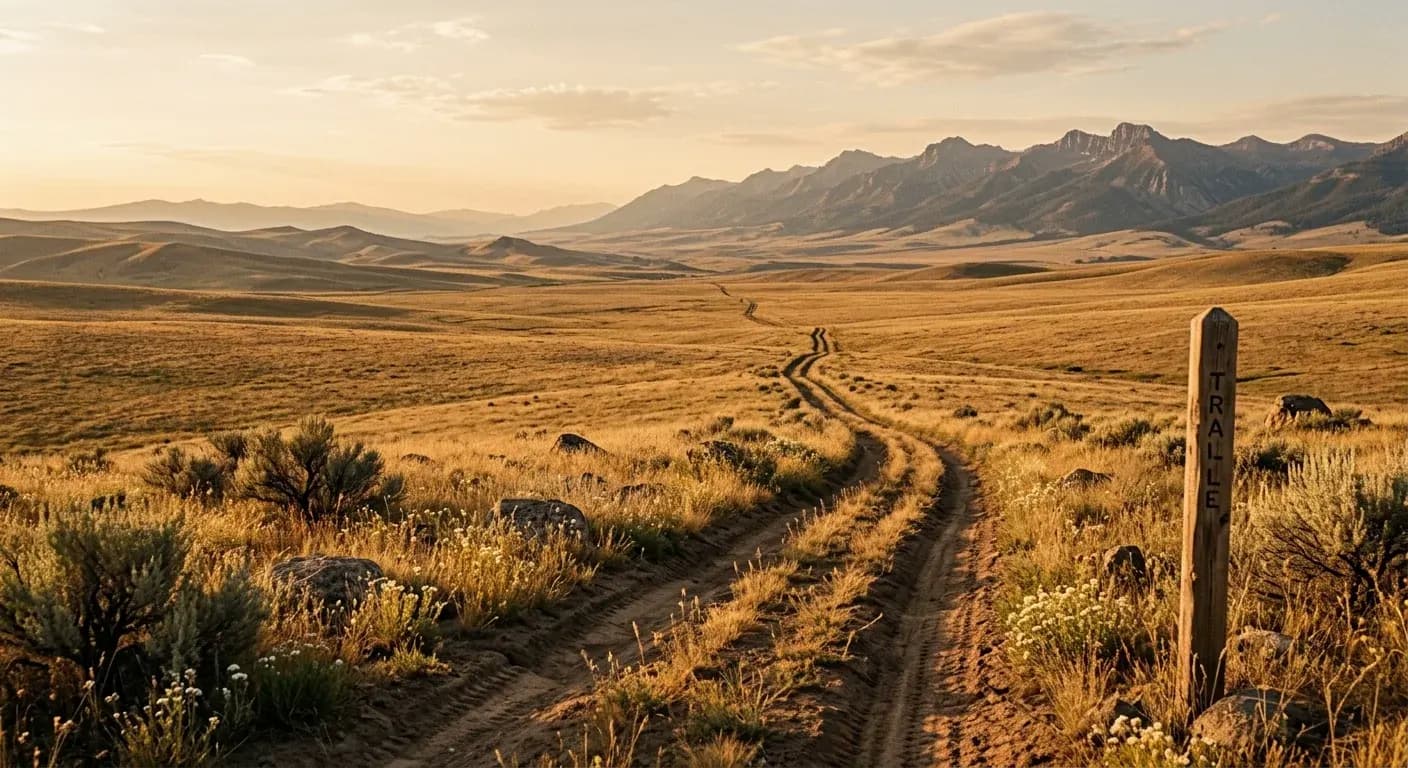
The trail is long. The wagon is the child.
The journey is the child's healing trek. You are the oxen, yoked to the wagon and pulling it through every stretch. Read the seven stretches of the trail, find the one your child is in right now, and meet them there.
Stretch 2 · Settling InHealing from childhood trauma does not happen in a weekend, a workshop, or a single good conversation. It happens on a trail the wagon and the oxen walk together, day after day, for a long time.
Most frameworks for hurting children were written as if the goal was to fix the child and stop. The Wagon Method was written for the long walk. It names where the child is on the trail, it names the next stretch, and it meets the wagon there with the right pace, the right language, and the right wagon train for this part of the journey.
The trail has seven stretches. No wagon moves through them in a straight line, and no two wagons cover the trail at the same speed. That is fine. The trail is not a race, and the stretches are not levels to clear. They are landmarks on a map, so the oxen know what they are pulling into next.
Things break on the trail. Wheels you tightened in the Prairies will need work again on the First Climb. A long quiet stretch on the Plateau can give way to terrain that steepens overnight. That is the shape of the trail, not the shape of failure. The wagon keeps moving because the oxen keep pulling, and the oxen keep pulling because the trail still has trail left.
The seven stretches
Landmarks on the child's trail, from what they carried before arriving to where they walk forward in a new shape.
Read through the stretches and notice which one sounds like your child's days right now. That is where to begin. You can always come back to this map when the ground shifts.
- Stretch 1 · BasecampStretch 1 of 7
Basecamp
Every child reaches your home from somewhere. The wagon they bring is the wagon they had before. The wheels that were sound, the cracks already there, the canopy already up. Basecamp is the world the child carried before the trail with you began.
Read the Basecamp essay
- Stretch 2 · Settling InStretch 2 of 7
Settling In
The early days in the new home. The wagon is finding its footing in unfamiliar terrain. Routines are forming, the kingpin (trust) is just beginning to set. Some children settle quietly. Some settle loudly. Either way, this is the period before what the child has been carrying starts to surface.
Read the Settling In essay
- Stretch 3 · PrairiesStretch 3 of 7
Prairies
The surface stays calm for a while, and then what the child has been carrying starts to surface. Behaviors that were dormant now show. The honeymoon, if there was one, ends. The trail begins to show the work the wagon needs, and the oxen feel the grade. This is not failure. The child is arriving at the work; the wagon and the oxen are arriving with them.
Read the Prairies essay
- Stretch 4 · First ClimbStretch 4 of 7
First Climb
A crisis, a major behavior episode, a placement scare, a school crisis, a hospitalization, a court hearing that did not go the way you hoped. The trail asks more than the Prairies did. What worked in earlier stretches does not work here. The child needs the wagon to hold. The oxen are pulling against a grade neither they nor the child have crossed before, and the wagon train is what makes the climb possible.
Read the First Climb essay
- Stretch 5 · PlateauStretch 5 of 7
Plateau
The acute phase has passed, or recurs in cycles. The child's wagon rolls most days. Progress feels invisible. The Plateau is where most caregivers think they are failing. They are not. The Plateau is the trail. This is where the long work of integration happens, in small daily turns rather than dramatic markers.
Read the Plateau essay
- Stretch 6 · Final PassStretch 6 of 7
Final Pass
Late-stage transitions. Permanency hearings, age-out at 18 or 21, court timelines, the work of preparing the handoff. The child is building toward driving their own wagon, in whatever shape that takes. The caregiver's role is changing from driver to passenger to companion.
Read the Final Pass essay
- Stretch 7 · ValleyStretch 7 of 7
Valley
What comes after this placement. Reunification, adoption, aging out, kinship transition, disruption. The work continues in different forms. The wagon walks the next stretch with what was built here. The harness changes shape; the oxen do not disappear from the trail, they reshape into a different rigging, a different distance, still part of how the wagon moves.
Read the Valley essay
How to use this map.
Start by finding the stretch your child is in. If you are not sure, the Find Your Child's Stretch tool asks a handful of questions and points you to the stretch that fits their days right now. It takes about two minutes.
Once you have a sense of the child's stretch, let it shape what you read next. Articles, strategies, and modules across the site are tagged with the stretch they were written for. The small Trail Context note at the bottom of each piece tells you where the content fits and where to go next.
When the ground shifts, come back. The trail shifts under every child, and the stretch that fit them in March may not be the stretch that fits them in October. That is not failure. That is movement. The wagon you repaired holds for this terrain; the next terrain will ask different work of the same wagon.