The myth of the bad behavior
Behavior is the body trying to communicate what the words cannot yet say. There is no such thing as a bad behavior. There is only an unread one.

The familiar frame
Most of us were raised inside a simple story about children and behavior. A child does something, and an adult names it good or bad. The good is praised, and the bad is corrected. Over time the child learns which list they want to be on, and the story is so ordinary it barely feels like a story. It feels like weather.
That frame gets something real, and children do learn from what the people around them mark. A household without any marking at all can feel like fog, and caregivers who came from chaos often work very hard to be clear. They want the child to know what is allowed, and they want the child to know they will not be left guessing. Clarity is not cruelty, and naming a boundary is one of the ways love gets a shape.
The familiar frame also honors a grief a lot of caregivers carry in private. You have tried kindness, and you have tried firmness. You have read the books that promised a calmer home if you were consistent enough. The child is still hitting, still lying about small things, still melting down in the cereal aisle. The story of "bad behavior" gives that pain a name, and if the behavior is bad, then there is a lever. If there is a lever, then tonight might be the night it finally works.
I have sat with a lot of adults who needed that lever, and I do not blame them for wanting it. When you are the one pulling the wagon, you need a story that makes the next hour possible.
Where it falls short
The trouble is not that the familiar frame is mean. The trouble is that it reads a survival body as a moral one.
A child who has learned that adults disappear, or explode, or come close and then turn dangerous, does not arrive in your kitchen as a blank page. They arrive with a nervous system that has already done a great deal of work: scanning, freezing, pleasing, bolting. The work was competent under the conditions that trained it, and it does not clock out because the walls are painted a softer color now.
When we call that work "bad," we are not only judging the child. We are misreading the signal, and volume is often a body saying the room is too much. A lie is often a body buying time, and a shutdown is often a body leaving without leaving. If you treat those as character, you will aim your energy at the wrong spoke.
The frame also quietly teaches the caregiver to take the behavior personally, and if the child is "being bad," then you are the audience. Shame rushes in, and so does the urge to win. Winning a power struggle with a frightened body is a lonely kind of victory. It rarely leaves anyone safer.
I want to be careful here, and the familiar frame is not a cartoon of harsh parents. Plenty of gentle people use it, and they use it because it is the water they swam in. They use it because schools still speak that language. They use it because a case note still has a box for "defiant." The frame is everywhere. That is why it is hard to see.
What it misses, and what this lens offers, is a different first question. Not "how do I stop this." First: "what is this behavior trying to keep this child alive to."
The lens
Call it the unread behavior.
Behavior is the body speaking when words are late, or unsafe, or not yet built. There is no such thing as a bad behavior in this frame, and there is only a message that has not been read yet. Some messages are loud, and some are so quiet they look like nothing. All of them belong to a nervous system doing its job with the tools it has.
On the wagon, this lives first on the Safety wheel: felt safety, a predictable environment, and the body that can come down. It also touches Love and Acceptance, because a child who is read instead of ranked is a child who can stay in relationship while they are still messy. Identity and Value comes later, and a child cannot believe they matter if every hard hour is filed under their character.
This lens usually shows up on the First Climb, and the honeymoon has ended. The child is no longer performing ease, and the house has weather. Caregivers often think they have done something wrong, and they have not. They have arrived at the stretch where the body's old maps come out in the open.
I think of a child in a new placement who dumped a whole drawer of socks on the floor every afternoon. The adults called it testing, and testing is a word that makes the child into a scientist of your limits. Maybe that was part of it, and when we slowed down, another reading was available. The child had lived in houses where belongings vanished, and dumping the drawer made every sock visible. Visible things are harder to lose, and that is not a good sock strategy. It is a readable one.
I think of the child who smiles too much in the first weeks. The familiar frame loves that child, and the unread-behavior frame gets a little worried. Extra brightness can be a scan, and it can be a body saying, I will be easy so I get to stay. Ease that arrives too fast is not proof that the Safety wheel is turning. It may be proof that the child is still pulling the wagon alone.
The lens does not ask you to enjoy the hard hour. It asks you to get curious before you get certain. Curiosity is not permissiveness, and you can still move a hitting body out of range of a sibling. You can still say the wall is not for kicking, and the difference is where you stand while you say it. You are not sentencing a character, and you are answering a body.
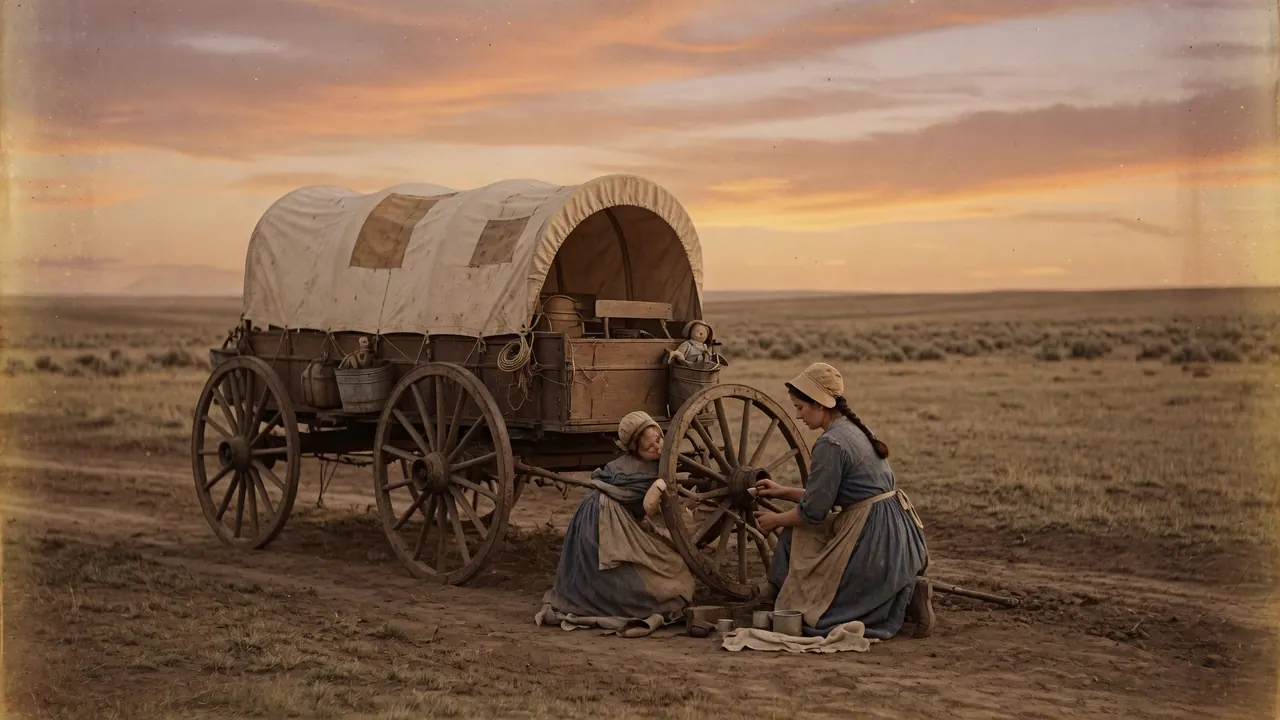
On the trail this is the difference between yanking a wheel that looks crooked and kneeling down to see whether the spoke is cracked. Yanking feels like action, and kneeling takes longer. The wagon actually moves after the second one.
I have watched caregivers try this and then feel foolish, because the culture around them is still grading the child in public. A relative says, that kid has you wrapped around their finger, and a teacher says, we need consequences that sting. The unread-behavior lens will not win that argument in a parking lot. It does not have to. It has to be sturdy enough that you can walk back into your own kitchen and still see the child in front of you.
What I have noticed in practice is that the hour often gets slightly less sharp when the adult's story changes, even before any technique does. The child can feel the difference between being managed and being read, and managed bodies brace. Read bodies sometimes, not always, come down one notch, and one notch is not a miracle. On a long trail, one notch is how wheels start to turn.
This is also why the catalog on this site keeps sending you to spokes instead of to personality labels. Calming strategies, and consistent routines. Safe expression, and those are places to work. "Bad kid" is not a place to work, and it is a closed door.
If you hold this lens, you will still have days when you hate the behavior. Of course you will, and you are a person. The lens is not a demand that you feel holy, and it is a demand that you not confuse your feeling with the child's identity.
Where this lens leads
You might start narrating the hour differently, at least to yourself, and not "here we go again with the attitude." Something closer to "the body is up. What might it be protecting." You do not have to say that out loud to the child. The private sentence is often enough to keep your own nervous system from joining the fire.
You might wait half a beat before the lecture, and half a beat is not a strategy with a worksheet. It is a small opening where a different reading can arrive.
You might look at the Safety wheel after the child is asleep and ask which spoke was wobbly today. Predictability, and felt safety in the body. A transition that had no warning, and those questions are less glamorous than a consequence chart. They are closer to the actual wagon.
You might also get more honest with your care team, and "Defiant" in a note can close a door. "When we asked them to stop the game, the body went into a freeze and then a swing" gives a clinician something to stand on. You are not diagnosing, and you are describing weather.
None of this asks you to like being hit, and none of this asks you to leave a smaller child in range of a bigger one. Safety first is still Safety first, and the lens changes the story you tell about why the hit arrived.
What this lens is not
This lens is not a claim that every behavior is fine, and it is not a ban on limits. It is not a theory of all childhood, and it is not a replacement for your child's care team when something is dangerous, sexual, or tied to a wish to die. Those hours have their own map and their own lines. The unread-behavior frame does not mean you delay a call to 988 or to the people who know this child.
It is also not a way to feel superior to the relatives who still say "bad." Most of us used that word. I used it, and the work is not to win. The work is to keep reading.
These strategies are starting points, not substitutes for your child's care team.
Did this land well for you?
No comment section here. If you need to talk through what you read, the community Q and A is the place.