What defiance looks like on paper
A school note that says defiant is often a survival body written down in the only language the form allows.
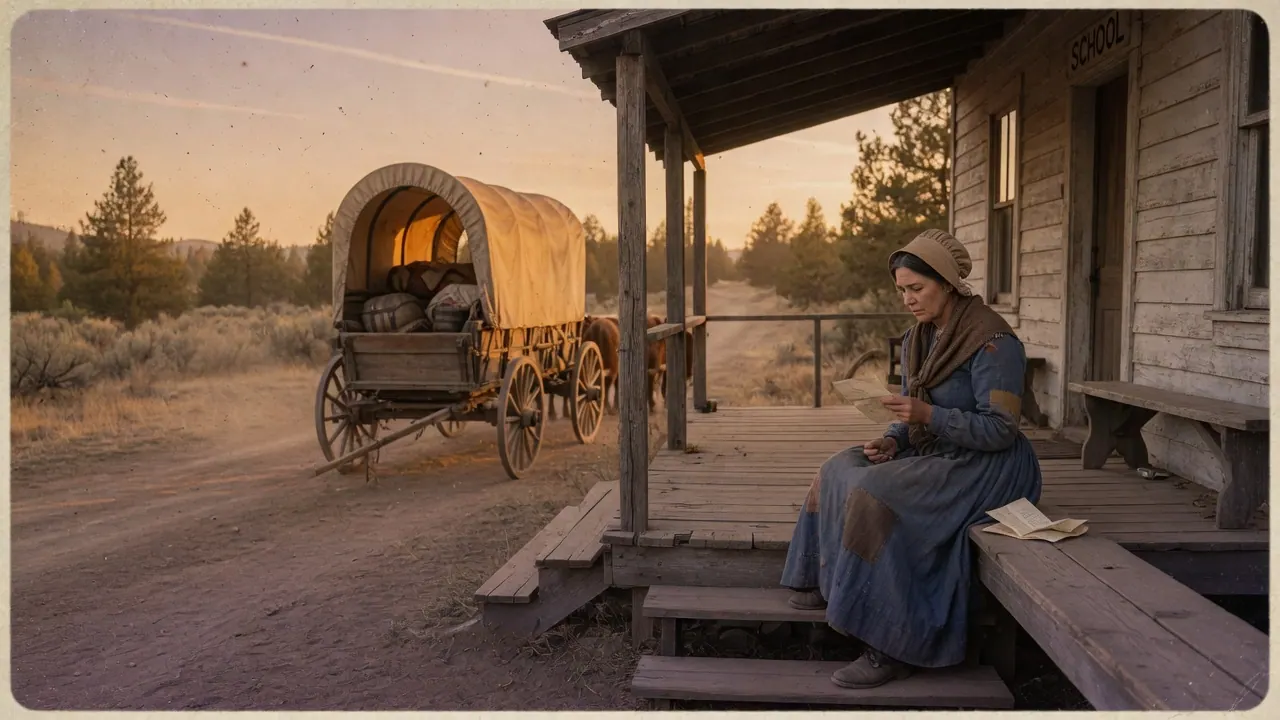
The note that arrives
You have seen this paper. A checkbox. A sentence that starts with "refused." A word like defiant, or noncompliant, or oppositional, sitting in a box that was built for speed.
Schools have to write something. They have many children, little time, and a form that was not designed for a nervous system with a long memory. The note is not always mean. It is often the only language the building has.
Caregivers feel it in the stomach anyway. If the paper says defiant, then tonight you might walk in already losing. You might rehearse the lecture on the drive home. You might wonder if you are the only one who sees a frightened child where the form sees a problem.
I do not think most teachers are villains in this. Plenty of them are tired, and plenty of them care. The policy is in the paper, not always in the person.
Where the paper fails
Defiance is a moral word. It assumes a child who could have chosen ease and picked a fight instead.
A child who has learned that adults disappear, or explode, or come close and then turn, does not arrive at the carpet as a blank page. When the room gets loud, or a demand lands without warning, the body may freeze, or bolt, or get sharp. On paper that can look like refusal. In the body it can be a scan.
Once the word is in the file, it travels. The next adult reads it before they meet your child. The meeting starts one step west of trust. You spend the hour translating a survival map into a language that fits a checkbox.
The paper also quietly recruits you. If you argue the word, you can be filed as the difficult parent. If you accept the word, you start managing a character instead of reading a body. Neither path is a good camp.
The lens
Read the form as weather, not as a verdict.
Ask what the body was doing when the note got written. Was there a transition with no warning. Was the room too bright, too loud, too crowded. Did the demand land while the child was already up from the last hour. Those questions do not excuse harm. They put the harm back on a wheel you can actually turn.
On the wagon this is Safety first: felt safety, predictability, a body that can come down. Identity and Value comes later. A child cannot believe they matter if every school paper files them under their worst ten minutes.
I have sat with caregivers who brought a one-sentence translation to the next meeting. Not "my child is not defiant." Something closer to "when the fire alarm drill started without a warning, the body went into a freeze and then a swing. We are working on warning and a quiet place to land." That sentence gives a teacher something to stand on. It is not a diagnosis. It is a trail report.
You can still agree that hitting is not allowed at school. You can still ask for a plan that does not start with shame. Limits and a readable story can live in the same meeting.
Where this lens leads
You might keep a small log at home for a week: what happened just before the hard hour. Time, noise, hunger, transition. Not a legal file. A weather journal. Patterns show up.
You might ask the school for one concrete spoke: a two-minute warning before a switch, a quiet corner, a trusted adult the child can find. Small, boring, western. That is how wagons move.
You might change what you write back. "Received. We will talk about hands on bodies, and we are also looking at the transition that came before." You are not fighting the paper. You are adding the rest of the trail.
What this lens is not
This lens is not a claim that schools should have no rules. It is not a demand that a teacher absorb hits. Safety in a classroom is still Safety.
It is not legal advice, and it is not a promise that every building will change its forms. Some will. Some will not. Your job is to keep seeing the child in front of you, even when the paper cannot.
It is also not a replacement for your child's care team when something is dangerous or tied to a wish to die. If the note is covering that kind of hour, call the people who know this child. 988 is still 988.
These strategies are starting points, not substitutes for your child's care team.
Did this land well for you?
No comment section here. If you need to talk through what you read, the community Q and A is the place.