The trail report starts here
One letter a week. Not a doom scroll. The landscape of caregiving, filtered through the wagon.
The week's frame
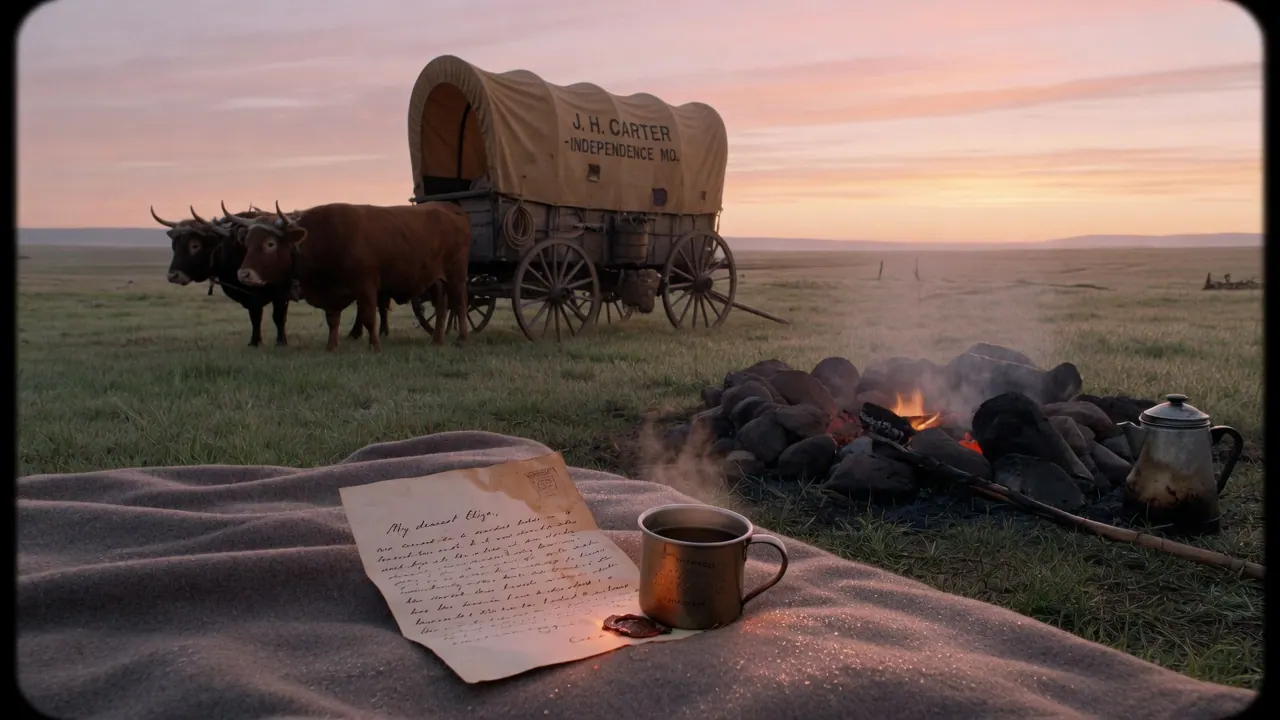
This week we start a letter. Not a feed. Not a stack of headlines competing for the part of you that is already tired. One letter a week, gathered on Sunday evening time, pointed at the trail you are already walking.
The news cycle will keep doing what it does. Reports will land. Policies will shift. A study will make a round of shares and then disappear. You do not owe any of that your last hour of the day. What you might want, if you have eight minutes, is a small weather report: what moved in the landscape of childhood trauma, caregiving, and the systems around them, and where that weather sits on the wagon.
This first letter is thinner than later ones will be on purpose. There is no single bill or study I am asking you to track tonight. The work of this issue is to name what the letter is for, point you at three pieces already on the shelf, and leave out everything else.
Why a letter instead of a scroll
A scroll rewards the next jolt. A letter asks you to sit down. The Wagon Method is a journey with visible progress over time. A journey needs a periodic look at the map, not a siren.
Each item below is short. Each one names a wheel or a stretch of trail. Each one sends you to a canonical piece on this site if you want to go further. None of them will ask you to panic. None of them will sell you a program.
If a later week carries a real policy change or a study worth translating, it will say so in plain words. It will also say what the item does not prove. That honesty is the point.
Item one: the letter itself
The News Feed on this site has been sitting empty while the library filled with help pages and practices. That emptiness was honest. We did not want to invent urgency so the page would look busy.
Starting now, this letter is the weekly trail report. Three to five items. A frame for the week. A short close. You can unsubscribe the same way you arrived. The Safety wheel still matters more than any headline. If tonight is hard, skip the letter and go to the piece that meets the hour.
When bedtime becomes a battleground is already on the shelf for that hour.
Item two: the Safety wheel as a weather report
A lot of public talk about children still starts with the behavior you can see from the doorway. Volume. Compliance. Whether the morning worked. The Wagon Method starts somewhere quieter. Safety, Stability, Love and Acceptance, Identity and Value. Four wheels. When one is wobbling, the whole wagon leans, even if nobody has a name for the lean yet.
If you have been calling this week "a behavior week," you might try calling it a Safety week instead and see what changes in your own chest. Not as a trick. As a different place to stand. The wheel pages are the map for that.
The Safety wheel is the longer walk if you want language for what Tuesday night was actually about.
Item three: a practice already in the wagon
Calming is not a personality. It is a spoke you can reach for when the room gets loud. The catalog already has a short practice piece on that spoke. It will not make the week tidy. It will give you one thing to try when the body in front of you has run out of words.
This is how the letter will usually work. An item in the landscape. A wheel or spoke. A link into a piece that is already here, written for 10pm, not for a conference.
Calming Strategies for Big Feelings is the practice on the shelf tonight.
What I left out
I left out the week's worst stories. I left out rankings and hot takes. I left out anything I could not connect to a wheel without stretching. Later letters will carry research notes and policy maps when there is something true to say. This one is a trailhead marker.
If you only read one line, read this: the letter will not try to outrun the night you are already in. It will try to hand you a map for the next stretch.
You can come back next week. You can also not come back, and that is still a complete use of the site. The library does not close when the letter is quiet.
These strategies are starting points, not substitutes for your child's care team.
Did this land well for you?
No comment section here. If you need to talk through what you read, the community Q and A is the place.